Drive Test & RF Optimization:
A Complete GuideDrive Test e Ottimizzazione RF:
Guida Completa
Drive testing remains the most reliable method for validating radio network performance in real-world conditions. While planning tools predict where coverage should be, and OMC counters report what the network thinks is happening, drive tests reveal what subscribers actually experience — on the specific roads, in the specific environments, and at the specific times that matter to your business.
Il drive testing rimane il metodo più affidabile per validare le prestazioni della rete radio in condizioni reali. Mentre gli strumenti di pianificazione prevedono dove dovrebbe esserci la copertura e i contatori OMC riportano ciò che la rete ritiene stia accadendo, i drive test rivelano ciò che gli abbonati sperimentano effettivamente — sulle strade specifiche, negli ambienti specifici e nei momenti specifici che contano per il tuo business.
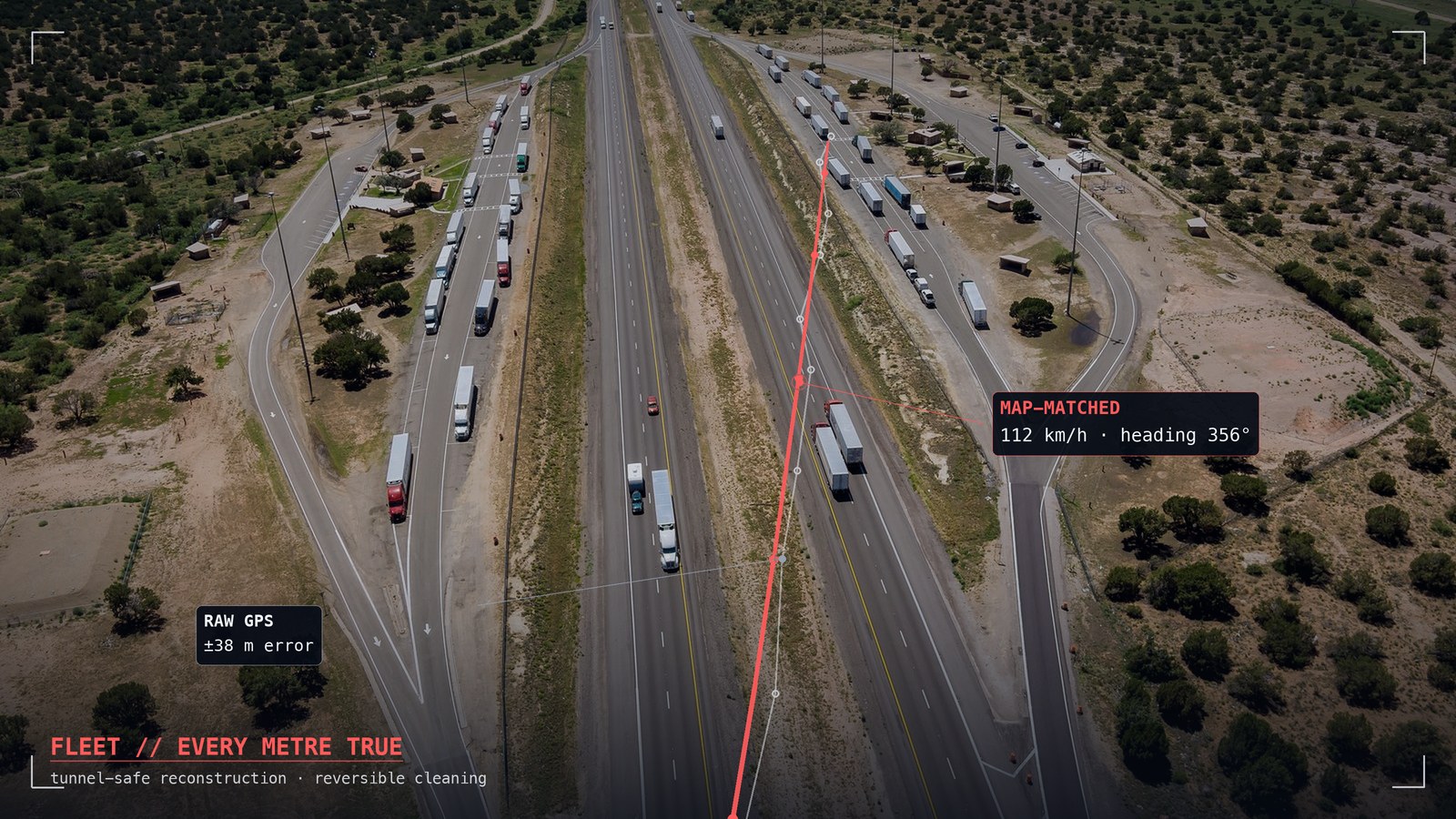
What Is Drive Testing?Cos'è il Drive Testing?
Drive testing is the systematic collection of radio and application performance measurements from a moving vehicle equipped with test UEs (User Equipment) and measurement software. The test vehicle follows a predetermined route — covering major roads, priority coverage areas, and known problem locations — while measurement equipment records RSRP, RSRQ, SINR, throughput, and application-layer KQIs synchronized to GPS coordinates and timestamps.
The output is a georeferenced dataset: every measurement point linked to a precise location, enabling visualization as a color-coded map overlay and statistical analysis by geographic segment (road type, distance from site, indoor/outdoor split). This geospatial dimension is what makes drive test data actionable — it transforms raw numbers into a spatial picture of network performance that engineers can interpret and operators can explain to regulators.
Il drive testing è la raccolta sistematica di misurazioni delle prestazioni radio e applicative da un veicolo in movimento equipaggiato con UE (User Equipment) di test e software di misura. Il veicolo di test segue un percorso predeterminato — coprendo le strade principali, le aree di copertura prioritarie e le posizioni con problemi noti — mentre l'attrezzatura di misura registra RSRP, RSRQ, SINR, throughput e KQI a livello applicativo sincronizzati con coordinate GPS e timestamp.
Il risultato è un dataset georeferenziato: ogni punto di misura collegato a una posizione precisa, che consente la visualizzazione come overlay di mappa a colori e l'analisi statistica per segmento geografico (tipo di strada, distanza dal sito, suddivisione indoor/outdoor). Questa dimensione geospaziale è ciò che rende i dati del drive test utilizzabili — trasforma i numeri grezzi in un quadro spaziale delle prestazioni di rete che gli ingegneri possono interpretare e gli operatori possono spiegare alle autorità di regolamentazione.
A drive test route colored by measured RSRP. Green = excellent coverage, yellow/orange = marginal, red = coverage hole requiring attention.Un percorso drive test colorato per RSRP misurato. Verde = copertura eccellente, giallo/arancio = marginale, rosso = buco di copertura che richiede attenzione.
Drive Test EquipmentAttrezzatura per Drive Test
A typical 5G drive test setup consists of several components working in concert:
Un tipico setup di drive test 5G è composto da diversi componenti che lavorano in sinergia:
Commercial Test UEsUE di Test Commerciali
Smartphones running test client software (TEMS Pocket, NEMO Handy, XCAL-Mobile) that log RRC-layer measurements alongside application throughput tests. Multiple UEs per vehicle provide statistical robustness and cover different frequency bands simultaneously.Smartphone con software client di test (TEMS Pocket, NEMO Handy, XCAL-Mobile) che registrano misurazioni a livello RRC insieme ai test di throughput applicativo. Più UE per veicolo forniscono robustezza statistica e coprono diverse bande di frequenza simultaneamente.
Dedicated Measurement ReceiversRicevitori di Misura Dedicati
Purpose-built scanners (TEMS Discovery, R&S TSME) decode broadcast channels without connecting as a subscriber, capturing RSRP/RSRQ from all visible cells simultaneously — not just the serving cell. Essential for neighbor cell analysis and interference mapping.Scanner costruiti ad hoc (TEMS Discovery, R&S TSME) decodificano i canali di broadcast senza connettersi come abbonato, catturando RSRP/RSRQ da tutte le celle visibili simultaneamente — non solo dalla cella servente. Essenziali per l'analisi delle celle vicine e la mappatura delle interferenze.
GPS ReceiverRicevitore GPS
A high-accuracy GPS receiver (±2m typical) provides the position lock that makes every measurement geographically meaningful. GNSS-synchronized timestamping ensures accurate correlation between measurements from different devices.Un ricevitore GPS ad alta precisione (±2m tipico) fornisce il lock di posizione che rende ogni misurazione geograficamente significativa. Il timestamping sincronizzato GNSS garantisce una correlazione accurata tra le misurazioni di dispositivi diversi.
Route Planning SoftwareSoftware di Pianificazione del Percorso
Pre-defined routes are loaded into the measurement software so that campaigns can be repeated on the same roads over time — enabling before/after comparisons after optimization or software upgrades.I percorsi predefiniti vengono caricati nel software di misura in modo che le campagne possano essere ripetute sulle stesse strade nel tempo — abilitando confronti prima/dopo l'ottimizzazione o gli aggiornamenti software.
Test MethodologyMetodologia di Test
Route DesignProgettazione del Percorso
Effective route design balances coverage breadth against statistical depth. A route that covers every road in the served area produces maximum geographic coverage but minimum samples per location — making it difficult to distinguish genuine coverage holes from measurement noise. Best practice is to define a hierarchical route set: a primary trunk route (major roads, repeated 3+ times per campaign for statistical significance) and supplemental routes for priority areas, coverage complaints, and competitor benchmarking zones.
Una progettazione efficace del percorso bilancia l'ampiezza di copertura con la profondità statistica. Un percorso che copre ogni strada dell'area servita produce la massima copertura geografica ma il minimo di campioni per posizione — rendendo difficile distinguere i veri buchi di copertura dal rumore di misura. La best practice è definire un insieme gerarchico di percorsi: un percorso trunk primario (strade principali, ripetuto 3+ volte per campagna per significatività statistica) e percorsi supplementari per aree prioritarie, segnalazioni di copertura e zone di benchmarking competitivo.
Test Traffic GenerationGenerazione del Traffico di Test
Alongside passive radio measurements, active service tests run continuously to measure end-user experience. Standard tests include: continuous FTP download (saturating the downlink to measure achievable throughput), periodic HTTP downloads (measuring TCP session establishment and content download time), VoNR call sequences (capturing MOS and packet loss), and ping sequences (measuring round-trip latency). The active tests must be coordinated to avoid mutual interference — running a 1 Gbps FTP download simultaneously with a VoNR call test will make the voice test look worse than it really is.
Insieme alle misurazioni radio passive, i test di servizio attivi vengono eseguiti continuamente per misurare l'esperienza dell'utente finale. I test standard includono: download FTP continuo (saturando il downlink per misurare il throughput raggiungibile), download HTTP periodici (misurando l'instaurazione della sessione TCP e il tempo di download dei contenuti), sequenze di chiamata VoNR (catturando MOS e perdita di pacchetti) e sequenze di ping (misurando la latenza round-trip). I test attivi devono essere coordinati per evitare interferenze reciproche — eseguire un download FTP da 1 Gbps contemporaneamente a un test di chiamata VoNR farà sembrare il test voce peggiore di quanto non sia realmente.
Sampling Rate and SpeedFrequenza di Campionamento e Velocità
At 50 km/h driving speed with 1-second measurement intervals, samples are spaced approximately 14 meters apart. For macro cell coverage testing this is adequate — coverage changes slowly with distance from a macro tower. For dense urban small cell testing or handover analysis, finer spatial resolution (sub-second sampling) is needed. Some measurement systems support 100ms or 200ms sampling rates, but this increases file size and post-processing time significantly.
A 50 km/h di velocità di guida con intervalli di misura di 1 secondo, i campioni sono spaziati di circa 14 metri. Per il test di copertura delle celle macro questo è adeguato — la copertura cambia lentamente con la distanza da una torre macro. Per il test di small cell in aree urbane dense o l'analisi degli handover, è necessaria una risoluzione spaziale più fine (campionamento sub-secondo). Alcuni sistemi di misura supportano frequenze di campionamento di 100ms o 200ms, ma questo aumenta significativamente le dimensioni del file e il tempo di post-processing.
Key Metrics and AnalysisMetriche Chiave e Analisi
Beyond individual sample values, the most useful drive test analysis looks at statistical distributions of each metric across geographic zones. Standard reports include:
Al di là dei valori dei singoli campioni, l'analisi più utile del drive test esamina le distribuzioni statistiche di ciascuna metrica nelle zone geografiche. I report standard includono:
CDF Analysis (Cumulative Distribution Function)Analisi CDF (Funzione di Distribuzione Cumulativa)
The CDF of RSRP shows what percentage of measurement locations fall above each RSRP threshold. The standard coverage KPI — 'percentage of route samples above −100 dBm RSRP' — comes directly from the CDF. Comparing CDFs between campaigns reveals whether a software update or parameter change improved coverage across the distribution, not just at specific locations.La CDF dell'RSRP mostra quale percentuale delle posizioni di misura supera ciascuna soglia RSRP. Il KPI di copertura standard — 'percentuale di campioni del percorso superiori a −100 dBm RSRP' — deriva direttamente dalla CDF. Confrontare le CDF tra campagne rivela se un aggiornamento software o una modifica dei parametri ha migliorato la copertura sull'intera distribuzione, non solo in posizioni specifiche.
Serving Cell AnalysisAnalisi della Cella Servente
Which cells are serving which parts of the route, and how frequently does the UE switch serving cells? Excessive serving cell changes (pilot pollution) indicate that multiple cells are at similar RSRP and the UE cannot settle — a classic cause of throughput degradation near cell boundaries.Quali celle servono quali parti del percorso e con quale frequenza l'UE cambia cella servente? Cambi eccessivi di cella servente (pilot pollution) indicano che più celle hanno RSRP simile e l'UE non riesce a stabilizzarsi — una causa classica di degradazione del throughput vicino ai confini di cella.
Handover AnalysisAnalisi degli Handover
Successful handover rate, handover ping-pong ratio, and time-on-target cell after handover all reveal the health of the mobility configuration. A handover ping-pong (A→B→A within seconds) is almost always a misconfigured handover offset or TTT (Time-to-Trigger) value.Il tasso di handover riusciti, il rapporto di ping-pong degli handover e il tempo sulla cella target dopo l'handover rivelano lo stato della configurazione di mobilità. Un ping-pong di handover (A→B→A in pochi secondi) è quasi sempre un valore di offset handover o TTT (Time-to-Trigger) mal configurato.
Throughput vs SINR CorrelationCorrelazione Throughput vs SINR
Plotting measured throughput against measured SINR for each sample reveals whether the actual MCS selection is following the expected spectral efficiency curve. Anomalously low throughput at high SINR is a strong indicator of scheduler bugs, configuration errors, or front-haul bottlenecks.Tracciare il throughput misurato rispetto al SINR misurato per ogni campione rivela se la selezione effettiva dell'MCS segue la curva di efficienza spettrale attesa. Un throughput anomalamente basso ad alto SINR è un forte indicatore di bug dello scheduler, errori di configurazione o colli di bottiglia del front-haul.
The RF Optimization CycleIl Ciclo di Ottimizzazione RF
Drive testing is only valuable when it feeds directly into an optimization action. The cycle moves through four stages, repeated until KPI targets are met:
Il drive testing ha valore solo quando alimenta direttamente un'azione di ottimizzazione. Il ciclo si articola in quattro fasi, ripetute fino al raggiungimento degli obiettivi KPI:
IdentifyIdentificare
Plot drive test measurements on the map and compare against planning tool predictions. Identify locations where measured RSRP or throughput falls below target, and correlate with serving cell, antenna azimuth, and terrain.Traccia le misurazioni del drive test sulla mappa e confrontale con le previsioni degli strumenti di pianificazione. Identifica le posizioni dove RSRP o throughput misurati scendono sotto il target e correla con la cella servente, l'azimuth dell'antenna e il terreno.
DiagnoseDiagnosticare
Determine the root cause: Is it a coverage gap (no cell close enough)? Pilot pollution (too many cells at similar strength)? Antenna tilt too steep (coverage not reaching far enough)? Handover failure (UE stuck on a distant cell)?Determina la causa radice: è un buco di copertura (nessuna cella abbastanza vicina)? Pilot pollution (troppe celle a potenza simile)? Tilt dell'antenna troppo ripido (la copertura non raggiunge abbastanza lontano)? Guasto di handover (UE bloccato su una cella lontana)?
OptimizeOttimizzare
Apply the corrective action: mechanical or electrical tilt adjustment, power level change, azimuth rotation, neighbor list update, handover parameter modification, or site addition. Changes are tracked in the network parameter management system.Applica l'azione correttiva: regolazione del tilt meccanico o elettrico, modifica del livello di potenza, rotazione dell'azimuth, aggiornamento della neighbor list, modifica dei parametri di handover o aggiunta di sito. Le modifiche vengono tracciate nel sistema di gestione dei parametri di rete.
VerifyVerificare
Repeat the drive test on the same route after the change. Compare the new measurements against the pre-change baseline. Confirm that the KPI improved and that no neighboring area was inadvertently degraded.Ripeti il drive test sullo stesso percorso dopo la modifica. Confronta le nuove misurazioni con il baseline pre-modifica. Conferma che il KPI sia migliorato e che nessuna area vicina sia stata inavvertitamente degradata.
Path loss model curves are calibrated against drive test measurements. A well-calibrated model reduces prediction error standard deviation below 8 dB.Le curve del modello di perdita di percorso vengono calibrate rispetto alle misurazioni del drive test. Un modello ben calibrato riduce la deviazione standard dell'errore di previsione sotto gli 8 dB.
Advanced TechniquesTecniche Avanzate
Walk Testing and Indoor CoverageWalk Testing e Copertura Indoor
Walk testing extends the drive test methodology to pedestrian environments. Testers carry measurement equipment on foot through shopping centres, transport hubs, office buildings, and dense urban areas where vehicles cannot operate. Floor-by-floor indoor walk tests characterize the transition between outdoor macro coverage penetrating through building facades and indoor small cells or DAS providing dedicated indoor coverage. Indoor walk test data is georeferenced using BLE beacons, Wi-Fi fingerprinting, or CAD floor plans rather than GPS (which is unavailable indoors).
Il walk testing estende la metodologia del drive test agli ambienti pedonali. I tester portano l'attrezzatura di misura a piedi attraverso centri commerciali, hub di trasporto, edifici per uffici e aree urbane dense dove i veicoli non possono operare. I walk test indoor piano per piano caratterizzano la transizione tra la copertura macro outdoor che penetra attraverso le facciate degli edifici e le small cell indoor o DAS che forniscono copertura indoor dedicata. I dati del walk test indoor vengono georeferenziati usando beacon BLE, fingerprinting Wi-Fi o planimetrie CAD anziché GPS (non disponibile in ambienti chiusi).
Drone Testing for Remote and Elevated EnvironmentsTest con Drone per Ambienti Remoti e in Quota
Drones equipped with measurement UEs can test coverage in environments impossible for ground vehicles: highway interchanges, industrial sites, coastal cliffs, construction sites, and rural areas with no road access. At altitude, the drone also captures the three-dimensional coverage pattern of antenna beams — particularly useful for validating massive MIMO elevation beamforming, where coverage extends both horizontally and vertically above the antenna.
I droni equipaggiati con UE di misura possono testare la copertura in ambienti impossibili per i veicoli terrestri: svincoli autostradali, siti industriali, scogliere costiere, cantieri e aree rurali senza accesso stradale. In quota, il drone cattura anche il pattern di copertura tridimensionale dei beam delle antenne — particolarmente utile per validare il beamforming di elevazione del massive MIMO, dove la copertura si estende sia orizzontalmente che verticalmente sopra l'antenna.
Post-Processing and ReportingPost-Processing e Reporting
Raw drive test log files (TEMS .log, NEMO .nmf, XCAL .xcal) must be processed before analysis. The standard processing pipeline: parse vendor-specific binary format → extract georeferenced samples → bin samples by geographic cell (100m × 100m) → compute per-bin statistics (mean, median, 5th/95th percentile) → compare against planning tool prediction → generate KPI report.
Automated report generation converts the processed dataset into regulator-ready coverage maps (PDF with color scale, legend, and statistics tables) and engineering reports (anomaly list, optimization priority ranking, before/after comparison). Regulators in most markets require annual or quarterly drive test evidence of coverage claim compliance.
I file di log grezzi del drive test (TEMS .log, NEMO .nmf, XCAL .xcal) devono essere elaborati prima dell'analisi. La pipeline di elaborazione standard: parsing del formato binario specifico del vendor → estrazione dei campioni georeferenziati → aggregazione dei campioni per cella geografica (100m × 100m) → calcolo delle statistiche per bin (media, mediana, 5°/95° percentile) → confronto con la previsione dello strumento di pianificazione → generazione del report KPI.
La generazione automatica dei report converte il dataset elaborato in mappe di copertura pronte per le autorità di regolamentazione (PDF con scala cromatica, legenda e tabelle statistiche) e report tecnici (elenco anomalie, classifica delle priorità di ottimizzazione, confronto prima/dopo). Le autorità di regolamentazione nella maggior parte dei mercati richiedono prove annuali o trimestrali di drive test per la conformità delle dichiarazioni di copertura.
NEXT Fusion Drive Test IntegrationIntegrazione Drive Test in NEXT Fusion
NEXT Fusion imports drive test data in standard formats (CSV with lat/lon/RSRP columns, GeoPackage, GeoJSON) and automatically renders it as a georeferenced point layer on the map canvas. The planning tool's coverage prediction is displayed simultaneously on the same map as a raster or polygon layer. The delta between predicted and measured RSRP is computed per sample and visualized as a separate layer — immediately surfacing the cells and locations where calibration is most needed.
NEXT Fusion importa i dati del drive test in formati standard (CSV con colonne lat/lon/RSRP, GeoPackage, GeoJSON) e li visualizza automaticamente come layer di punti georeferenziato sul canvas della mappa. La previsione di copertura dello strumento di pianificazione viene visualizzata simultaneamente sulla stessa mappa come layer raster o poligonale. Il delta tra RSRP previsto e misurato viene calcolato per ogni campione e visualizzato come layer separato — evidenziando immediatamente le celle e le posizioni dove la calibrazione è più necessaria.
Multi-format ImportImportazione Multi-formato
CSV, GeoPackage, GeoJSON, and TEMS native log formats supported.Supportati CSV, GeoPackage, GeoJSON e formati log nativi TEMS.
Prediction vs MeasuredPrevisione vs Misurato
Delta layer computed automatically — filter to samples where error exceeds ±8 dB.Layer delta calcolato automaticamente — filtra i campioni dove l'errore supera ±8 dB.
Regulator ExportExport per Regolatori
PDF coverage maps with statistics tables, ready for regulatory submission.Mappe di copertura PDF con tabelle statistiche, pronte per la presentazione alle autorità di regolamentazione.