Smart Cities Architecture:
Integrated Urban SystemsArchitettura delle Città Intelligenti:
Sistemi Urbani Integrati
Modern cities integrate sensors, data analytics, and connected infrastructure across traffic, energy, water, waste, and citizen services. By applying real-time data and geospatial intelligence to urban management, cities reduce congestion, conserve resources, improve public safety, and enhance quality of life for residents.
Le città moderne integrano sensori, analisi dei dati e infrastrutture connesse attraverso traffico, energia, acqua, rifiuti e servizi ai cittadini. Applicando dati in tempo reale e intelligenza geospaziale alla gestione urbana, le città riducono la congestione, conservano le risorse, migliorano la sicurezza pubblica e innalzano la qualità della vita dei residenti.
What Makes a City Smart?Cosa Rende una Città Smart?
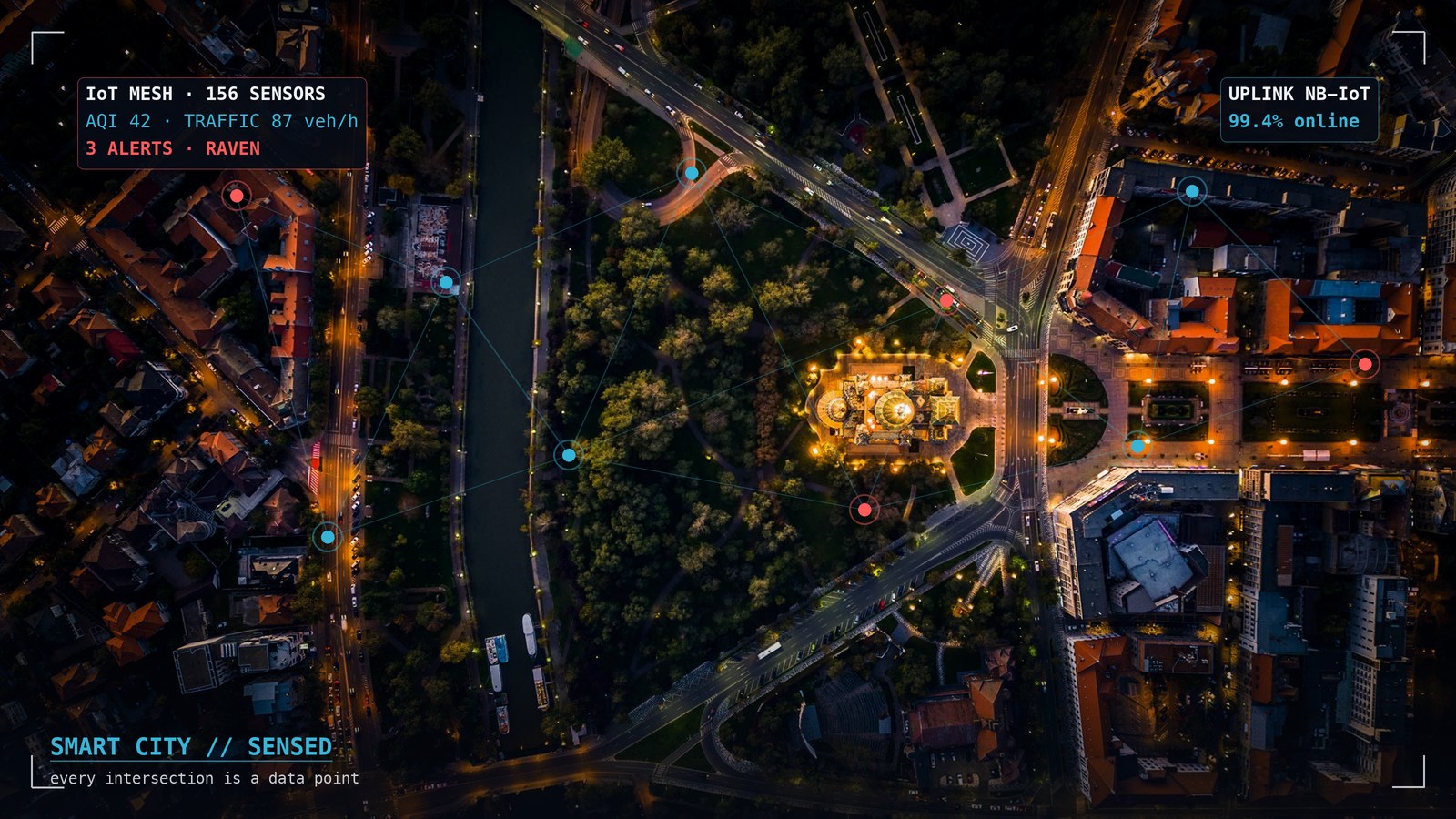
A smart city uses technology and data to solve urban challenges at scale. Rather than managing traffic, energy, and waste as isolated systems, smart cities integrate them: traffic lights communicate with transit systems, energy grids shift load based on demand patterns and renewable generation, and waste collection routes optimize based on fill levels. The foundation is geospatial data — mapping every intersection, power line, water pipe, and service point so that decisions are informed by location and real-time conditions.
Una smart city usa la tecnologia e i dati per risolvere le sfide urbane su larga scala. Invece di gestire traffico, energia e rifiuti come sistemi isolati, le città intelligenti li integrano: i semafori comunicano con i sistemi di trasporto pubblico, le reti elettriche spostano i carichi in base ai modelli di domanda e alla generazione rinnovabile, i percorsi di raccolta rifiuti si ottimizzano in base ai livelli di riempimento. Il fondamento è il dato geospaziale — mappare ogni incrocio, linea elettrica, tubazione idrica e punto di servizio affinché le decisioni siano guidate dalla posizione e dalle condizioni in tempo reale.
Smart city infrastructure showing integrated systems: traffic management, parking, utilities, waste collection, and air quality monitoring networked through a central data platform.Infrastruttura smart city con sistemi integrati: gestione del traffico, parcheggi, servizi pubblici, raccolta rifiuti e monitoraggio della qualità dell'aria interconnessi tramite una piattaforma dati centrale.
Integrated Systems ArchitectureArchitettura dei Sistemi Integrati
Smart city architectures combine multiple data streams into unified platforms that enable cross-domain optimization. A central data hub aggregates inputs from thousands of sensors: real-time traffic counts, energy consumption, water usage, waste container levels, air quality, weather. Analytics engines detect patterns and anomalies, triggering automated responses: rerouting traffic before congestion forms, balancing power loads across microgrids, scheduling waste pickups to minimize collection trips, and alerting public health agencies to pollution hotspots.
Le architetture delle smart city combinano molteplici flussi di dati in piattaforme unificate che abilitano l'ottimizzazione trasversale ai domini. Un hub dati centrale aggrega gli input da migliaia di sensori: conteggi del traffico in tempo reale, consumo energetico, utilizzo dell'acqua, livelli dei contenitori rifiuti, qualità dell'aria, meteo. I motori di analisi rilevano schemi e anomalie, attivando risposte automatizzate: deviazione del traffico prima che si formi la congestione, bilanciamento dei carichi di potenza nelle microreti, pianificazione dei ritiri rifiuti per minimizzare i viaggi di raccolta e allerta alle agenzie sanitarie sui punti critici di inquinamento.
Traffic Intelligence SystemsSistemi di Intelligenza Traffico
Networked traffic lights, vehicle detection sensors, and transit vehicle tracking provide real-time visibility into traffic flow. Adaptive signal timing adjusts based on demand, reducing congestion and emissions. Transit agencies use the same data to optimize bus/tram routes dynamically.Semafori in rete, sensori di rilevamento veicoli e tracciamento dei mezzi di trasporto pubblico offrono visibilità in tempo reale sul flusso del traffico. La regolazione adattiva dei segnali si adegua alla domanda, riducendo congestione ed emissioni. Le aziende di trasporto usano gli stessi dati per ottimizzare dinamicamente le linee di autobus e tram.
Smart Energy GridsReti Elettriche Intelligenti
Distributed renewable energy (solar, wind) requires real-time demand-supply balancing. Smart meters and grid sensors report consumption and generation. Algorithms shift loads (EV charging, heating) to match renewable peaks and manage peak demand to reduce infrastructure stress.L'energia rinnovabile distribuita (solare, eolica) richiede un bilanciamento domanda-offerta in tempo reale. I contatori intelligenti e i sensori di rete segnalano consumi e generazione. Gli algoritmi spostano i carichi (ricarica veicoli elettrici, riscaldamento) per allinearsi ai picchi rinnovabili e gestire la domanda di punta, riducendo lo stress sull'infrastruttura.
Water & Waste OptimizationOttimizzazione Acqua e Rifiuti
Leak detection sensors identify pipe failures before major water loss occurs. Smart waste containers signal when full, optimizing collection routes and reducing unnecessary trips. Water usage analytics reveal consumption patterns enabling conservation incentives.I sensori di rilevamento perdite identificano i guasti alle tubazioni prima che si verifichino gravi dispersioni idriche. I cassonetti intelligenti segnalano quando sono pieni, ottimizzando i percorsi di raccolta e riducendo i viaggi inutili. Le analisi del consumo idrico rivelano i modelli di utilizzo, consentendo incentivi al risparmio.
Public Safety & Emergency ResponseSicurezza Pubblica e Pronto Intervento
Sensors detecting air quality, seismic activity, or structural stress alert agencies. Integrated dispatch systems route emergency vehicles via unblocked paths. CCTV and gunshot detection systems (privacy-considered) enable faster response to incidents.I sensori che rilevano qualità dell'aria, attività sismica o stress strutturale allertano le agenzie competenti. I sistemi di dispacciamento integrati instradano i veicoli di emergenza attraverso percorsi liberi. I sistemi CCTV e di rilevamento spari (nel rispetto della privacy) consentono una risposta più rapida agli incidenti.
Traffic & Mobility ManagementGestione del Traffico e della Mobilità
Urban traffic congestion costs cities billions in lost productivity and pollutants. Smart cities deploy sensor networks at intersections and along corridors to measure vehicle flows and travel times in real-time. Machine learning models predict congestion 15-30 minutes ahead, enabling preemptive signal adjustments and dynamic route guidance via navigation apps. Integration with parking systems directs drivers to available spaces, reducing time spent circling looking for spots. Public transit systems share real-time position data, enabling accurate arrival predictions and enabling commuters to make informed decisions.
La congestione del traffico urbano costa alle città miliardi in produttività perduta e inquinanti. Le smart city distribuiscono reti di sensori agli incroci e lungo i corridoi per misurare in tempo reale i flussi veicolari e i tempi di percorrenza. I modelli di machine learning prevedono la congestione con 15-30 minuti di anticipo, consentendo aggiustamenti preventivi dei segnali e indicazioni dinamiche dei percorsi tramite app di navigazione. L'integrazione con i sistemi di parcheggio indirizza i conducenti verso i posti disponibili, riducendo il tempo speso a girare in cerca di parcheggio. I sistemi di trasporto pubblico condividono i dati di posizione in tempo reale, abilitando previsioni di arrivo accurate e consentendo ai pendolari di prendere decisioni informate.
Energy, Water & UtilitiesEnergia, Acqua e Servizi
Traditional utility systems are designed for peak demand, leaving infrastructure underutilized much of the time. Smart systems enable demand response: when renewable energy generation surges, energy management systems shift flexible loads (EV charging, water pumping, air conditioning set points) to consume available supply. Machine learning models trained on historical data and weather forecasts predict demand patterns, optimizing generation and reducing waste. Water systems use similar approaches: real-time monitoring detects leaks instantly, pressure sensors prevent pipe ruptures, and consumption analytics reveal usage patterns enabling conservation.
I sistemi di pubblica utilità tradizionali sono progettati per la domanda di punta, lasciando l'infrastruttura sottoutilizzata per la maggior parte del tempo. I sistemi intelligenti abilitano la risposta alla domanda: quando la generazione di energia rinnovabile cresce, i sistemi di gestione energetica spostano i carichi flessibili (ricarica veicoli elettrici, pompaggio dell'acqua, impostazioni del condizionamento) per consumare l'offerta disponibile. I modelli di machine learning addestrati su dati storici e previsioni meteorologiche prevedono i modelli di domanda, ottimizzando la generazione e riducendo gli sprechi. I sistemi idrici adottano approcci simili: il monitoraggio in tempo reale rileva le perdite istantaneamente, i sensori di pressione prevengono le rotture delle tubazioni e le analisi dei consumi rivelano i modelli di utilizzo consentendo misure di conservazione.
NEXT Fusion IntegrationIntegrazione con NEXT Fusion
The NEXT Fusion provides the geospatial foundation for smart city planning and operations. Import city infrastructure layers (roads, utilities, buildings, zones), overlay real-time sensor data, and visualize system interactions on unified maps. Identify optimal locations for new infrastructure investments, analyze coverage gaps in sensor networks, correlate traffic patterns with energy demand, and measure the impact of policy changes before implementation.
La piattaforma NEXT Fusion fornisce la base geospaziale per la pianificazione e le operazioni della smart city. Importa i layer dell'infrastruttura urbana (strade, servizi, edifici, zone), sovrapponi i dati dei sensori in tempo reale e visualizza le interazioni tra sistemi su mappe unificate. Identifica le posizioni ottimali per i nuovi investimenti infrastrutturali, analizza le lacune di copertura nelle reti di sensori, correla i modelli di traffico con la domanda energetica e misura l'impatto delle variazioni di policy prima dell'implementazione.