Advanced GIS Analysis:
Spatial Techniques for Decision-MakingAnalisi GIS Avanzata:
Tecniche Spaziali per le Decisioni
Modern GIS goes beyond mapping. Advanced spatial analysis combines multiple datasets, discovers hidden patterns, and predicts outcomes using geographic algorithms and machine learning. Organizations leveraging these techniques unlock competitive advantages: identifying optimal locations, predicting customer behavior, detecting anomalies, and optimizing resource allocation at scale.
Il GIS moderno va oltre la mappatura. L'analisi spaziale avanzata combina più dataset, scopre pattern nascosti e prevede risultati usando algoritmi geografici e machine learning. Le organizzazioni che sfruttano queste tecniche ottengono vantaggi competitivi: identificare posizioni ottimali, prevedere il comportamento dei clienti, rilevare anomalie e ottimizzare l'allocazione delle risorse su larga scala.
What Is Advanced GIS Analysis?Cos'è l'Analisi GIS Avanzata?
Traditional GIS visualizes data on maps. Advanced GIS analysis discovers relationships. What buildings are within a 500m radius of a transit stop? Which customers are closest to new store locations? How do income levels correlate with pollution exposure? Which regions have untapped service opportunity? These questions require combining datasets, measuring distances and areas, and applying statistical or machine learning models. The result is actionable insight: not just a map, but a prediction or recommendation.
Il GIS tradizionale visualizza i dati su mappe. L'analisi GIS avanzata scopre le relazioni. Quali edifici sono nel raggio di 500 m da una fermata del trasporto pubblico? Quali clienti sono più vicini alle nuove ubicazioni dei negozi? Come si correlano i livelli di reddito con l'esposizione all'inquinamento? Quali regioni hanno opportunità di servizio non sfruttate? Queste domande richiedono la combinazione di dataset, la misurazione di distanze e aree, e l'applicazione di modelli statistici o di machine learning. Il risultato è un'informazione operativa: non solo una mappa, ma una previsione o una raccomandazione.
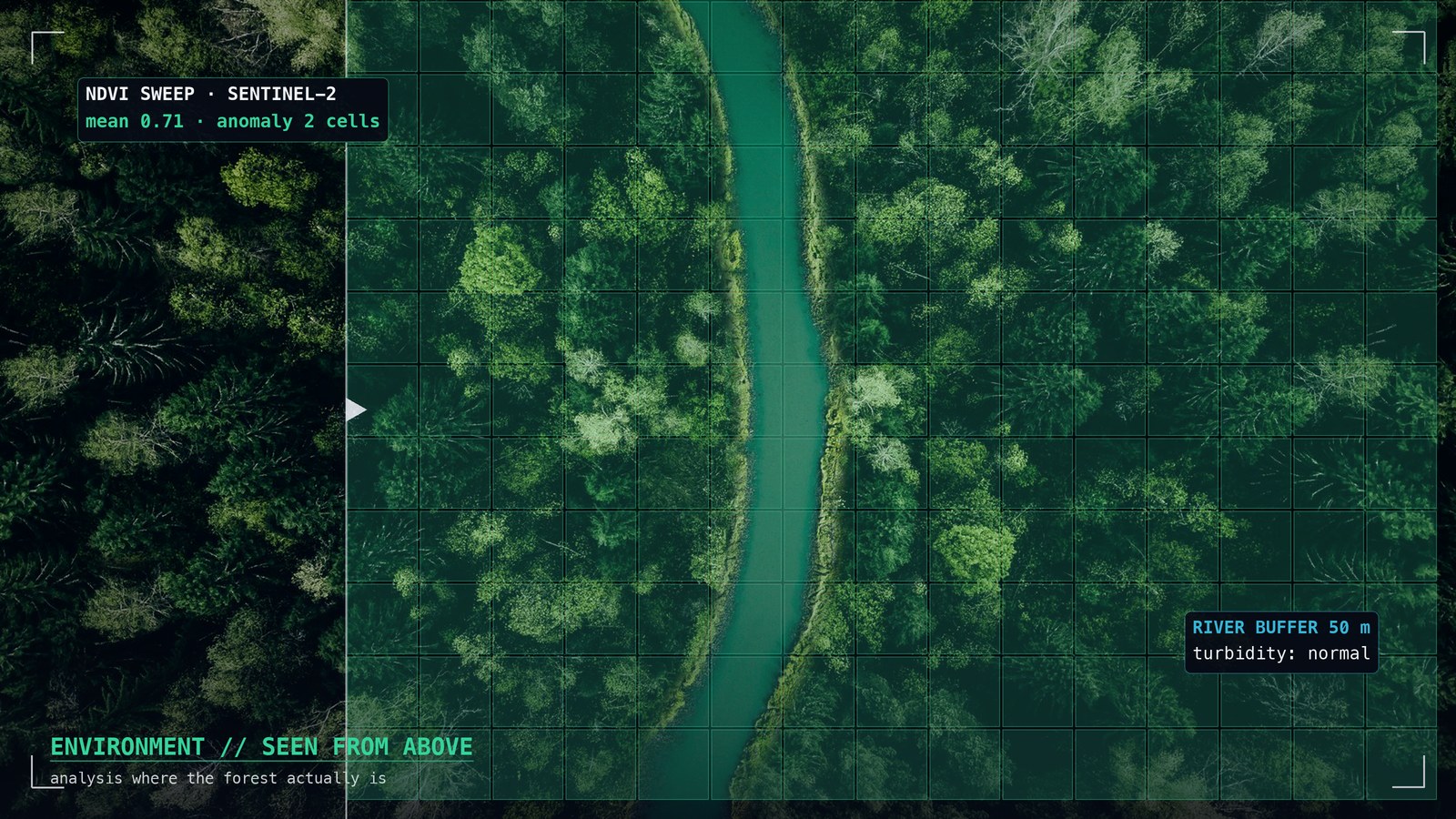
Layered GIS analysis showing multiple data sources (buildings, transport, utilities, demographics) combined for spatial analysis with real-time ML predictions.Analisi GIS a livelli che mostra più fonti di dati (edifici, trasporti, utilities, dati demografici) combinate per l'analisi spaziale con previsioni ML in tempo reale.
Spatial Analysis TechniquesTecniche di Analisi Spaziale
The GIS analyst's toolkit includes powerful operations for spatial reasoning. Spatial joins merge datasets based on location (e.g., "which customers are in flood zones?"). Buffer analysis creates zones around features (e.g., "which properties are within 1km of a highway?"). Interpolation fills gaps in data: weather stations measure rain at point locations; spatial interpolation estimates rainfall across unmeasured areas. Network analysis solves routing problems on graphs (e.g., shortest path from A to B accounting for network topology). These operations form the foundation for location intelligence.
Il toolkit dell'analista GIS include potenti operazioni per il ragionamento spaziale. I join spaziali uniscono dataset in base alla posizione (es. "quali clienti si trovano in zone alluvionali?"). L'analisi di buffer crea zone attorno agli elementi (es. "quali proprietà sono entro 1 km da un'autostrada?"). L'interpolazione colma le lacune nei dati: le stazioni meteorologiche misurano la pioggia in punti localizzati; l'interpolazione spaziale stima le precipitazioni nelle aree non misurate. L'analisi di rete risolve problemi di routing su grafi (es. percorso più breve da A a B tenendo conto della topologia della rete). Queste operazioni costituiscono le basi della location intelligence.
Spatial JoinsJoin Spaziali
Combine two datasets based on geographic relationship (intersects, contains, near). Merge customer locations with demographic data, property parcels with regulatory zones, or damage assessments with infrastructure networks.Combina due dataset in base alla relazione geografica (interseca, contiene, vicino). Unisce le posizioni dei clienti con i dati demografici, le particelle catastali con le zone regolamentari, o le valutazioni dei danni con le reti infrastrutturali.
Buffer & Proximity AnalysisAnalisi di Buffer e Prossimità
Create zones around features at specified distances. Find buildings within flood zones, customers near new locations, environmental hazards affecting populated areas. Supports distance-based decision-making.Crea zone attorno agli elementi a distanze specificate. Individua edifici in zone alluvionali, clienti vicino a nuove ubicazioni, pericoli ambientali che interessano aree abitate. Supporta il processo decisionale basato sulla distanza.
Interpolation & Spatial StatisticsInterpolazione e Statistica Spaziale
Estimate values at unmeasured locations using neighboring data points. Kriging for smooth surfaces, IDW (Inverse Distance Weighting) for quick estimates. Fill gaps in sensor networks or survey data.Stima i valori in posizioni non misurate usando i punti dati vicini. Kriging per superfici lisce, IDW (Inverse Distance Weighting) per stime rapide. Colma le lacune nelle reti di sensori o nei dati di rilevamento.
Network Analysis & RoutingAnalisi di Rete e Routing
Solve optimization problems on networks: shortest route accounting for traffic/costs, facility location (optimal depot placement), accessibility (service coverage), connectivity analysis (isolated populations).Risolve problemi di ottimizzazione su reti: percorso più breve tenendo conto del traffico/costi, localizzazione delle strutture (posizionamento ottimale dei depositi), accessibilità (copertura del servizio), analisi della connettività (popolazioni isolate).
Multi-source Data IntegrationIntegrazione di Dati Multi-sorgente
Value emerges at the intersection of datasets. A retail chain combines foot traffic data with real estate parcels, demographics, competitor locations, and transit access to identify optimal expansion sites. An insurance company merges building data with hazard maps, climate projections, and claims history to price policies. A city integrates traffic counts, crash data, and pedestrian populations to identify dangerous intersections. The GIS analyst's role is designing the data pipeline: which sources, at what resolution, in what format? Geospatial integration requires careful attention to projection systems, coordinate precision, data freshness, and validation.
Il valore emerge all'intersezione dei dataset. Una catena di distribuzione combina i dati di affluenza con le particelle immobiliari, i dati demografici, le posizioni dei competitor e l'accesso ai trasporti per identificare i siti di espansione ottimali. Una compagnia assicurativa unisce i dati sugli edifici con le mappe dei rischi, le proiezioni climatiche e la storia dei sinistri per calcolare i premi. Una città integra i conteggi del traffico, i dati sugli incidenti e le popolazioni pedonali per identificare gli incroci pericolosi. Il ruolo dell'analista GIS è progettare il pipeline dei dati: quali sorgenti, a quale risoluzione, in quale formato? L'integrazione geospaziale richiede particolare attenzione ai sistemi di proiezione, alla precisione delle coordinate, all'aggiornamento dei dati e alla validazione.
Machine Learning on Geographic DataMachine Learning sui Dati Geografici
Machine learning models trained on geographic data predict outcomes based on location and neighboring features. Spatial regression models account for geographic autocorrelation (nearby things are more similar). Classification models predict land use, property value ranges, or customer churn based on location features. Clustering algorithms group similar areas, identifying neighborhoods by character. Deep learning on satellite imagery detects crop types, building damage, or urban expansion. The key insight: location matters, and ML on geographic data exploits this to make better predictions than models ignoring space.
I modelli di machine learning addestrati su dati geografici prevedono i risultati in base alla posizione e alle caratteristiche limitrofe. I modelli di regressione spaziale tengono conto dell'autocorrelazione geografica (le cose vicine sono più simili). I modelli di classificazione prevedono l'uso del suolo, le fasce di valore degli immobili o il churn dei clienti in base alle caratteristiche di posizione. Gli algoritmi di clustering raggruppano aree simili, identificando i quartieri per carattere. Il deep learning sulle immagini satellitari rileva tipi di coltura, danni agli edifici o espansione urbana. L'insight chiave: la posizione conta, e il ML sui dati geografici lo sfrutta per fare previsioni migliori rispetto ai modelli che ignorano lo spazio.
NEXT Fusion IntegrationIntegrazione con NEXT Fusion
The NEXT Fusion provides an integrated environment for advanced spatial analysis. Import multiple datasets (building footprints, zoning, demographics, networks), inspect data quality, perform spatial joins and buffer analysis, and apply statistical or machine learning models. Visualize results on interactive maps, enabling stakeholders to explore results and build confidence in recommendations. Export analysis results for integration with downstream systems (enterprise planning tools, operational databases).
La Piattaforma NEXT Fusion fornisce un ambiente integrato per l'analisi spaziale avanzata. Importa più dataset (impronte degli edifici, zonizzazione, dati demografici, reti), ispeziona la qualità dei dati, esegui join spaziali e analisi di buffer, e applica modelli statistici o di machine learning. Visualizza i risultati su mappe interattive, consentendo agli stakeholder di esplorare i risultati e rafforzare la fiducia nelle raccomandazioni. Esporta i risultati dell'analisi per l'integrazione con i sistemi downstream (strumenti di pianificazione aziendale, database operativi).